
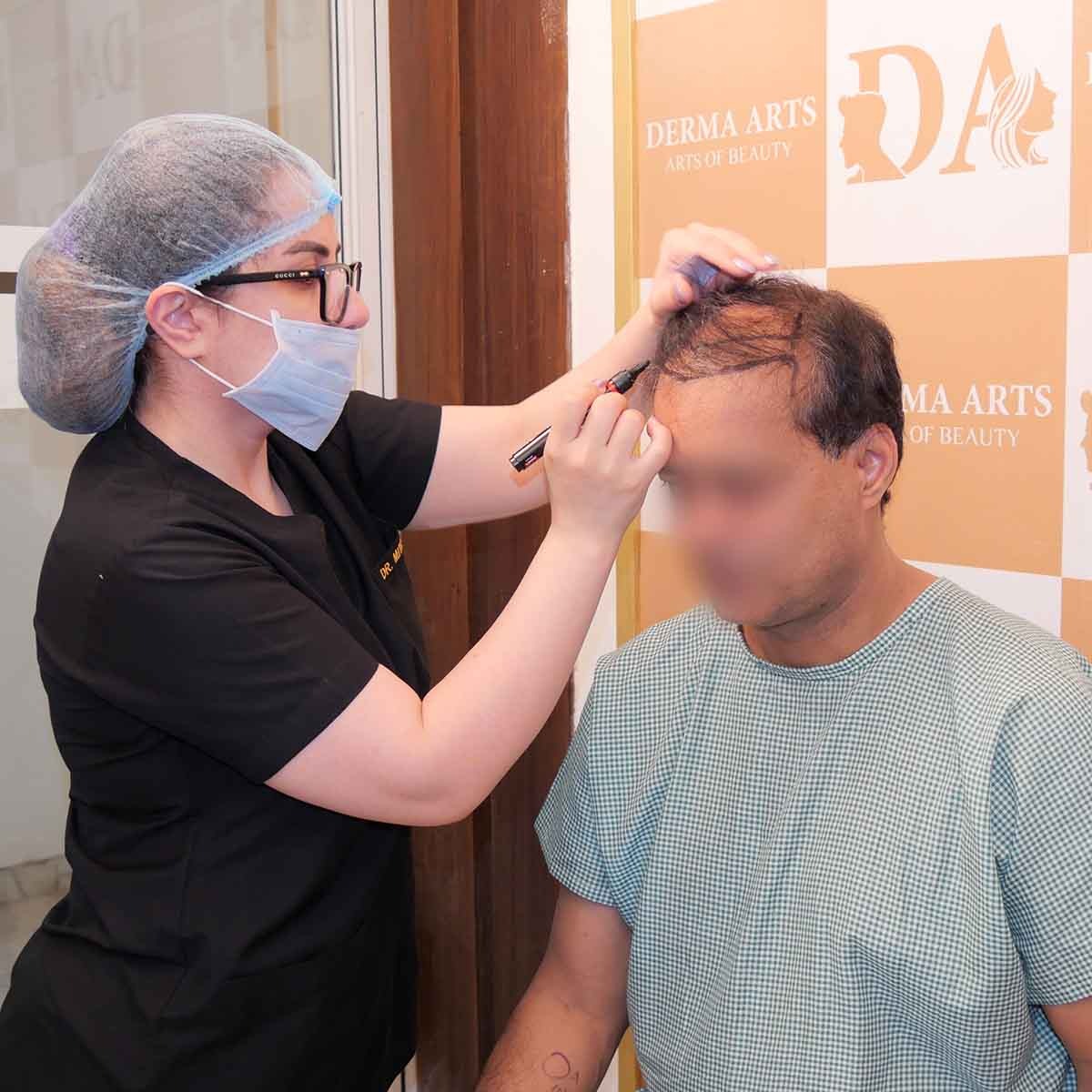
Hair Transplant: Is It a Long Term Permanent Solution?
Last Updated on December 29, 2025 by Derma Arts Team
Hair loss can be emotionally challenging, and many people considering a hair transplant often ask one important question: Is a hair transplant a permanent, long-term solution?
If you are worried about the results, durability, and safety of hair transplantation, this guide will help you understand everything clearly.
Over the last decade, hair transplant techniques have evolved significantly. Gone are the days of unnatural hair plugs. Today’s procedures deliver natural-looking, long-lasting, and safe results when performed by experienced specialists.
What Is a Hair Transplant?
A hair transplant is a medical procedure that involves transferring healthy hair follicles from a donor area—usually the back or sides of the scalp—to areas affected by hair loss or baldness.
Since the transplanted follicles come from your own body, the procedure is considered safe and well-tolerated.
Hair transplantation is primarily used to treat:
- Male and female pattern baldness
- Receding hairlines
- Thinning crowns
- Patchy hair loss due to genetics or medical reasons
How Does a Hair Transplant Work?
During the procedure, the surgeon carefully extracts healthy hair follicles from the donor area and implants them into bald or thinning regions. The process is performed under local anesthesia, making it comfortable and minimally painful.
After transplantation, the follicles adapt to their new location and gradually begin producing hair naturally.
Types of Hair Transplant Procedures
Today, two advanced and globally accepted techniques are used:
- Follicular Unit Transplantation (FUT)
This method involves removing a thin strip of scalp from the donor area. Individual hair follicles are then separated and implanted into bald areas. FUT is ideal for patients requiring a large number of grafts. - Follicular Unit Extraction (FUE)
FUE is a minimally invasive technique where individual hair follicles are extracted directly using micro-punch tools and transplanted. It offers faster recovery, minimal scarring, and natural results.
Both FUT and FUE provide permanent and natural-looking outcomes when done correctly.
Is Hair Transplant a Long-Term Solution?
It may take more or less six to twelve months for your body to heal properly. The transplanted hair follicle, however, starts to grow hair after the healing process is over, covering the bald spots on your scalp. As you age, this hair will normally continue to grow.
There is no method to return the hair follicles to their former position because the hair follicle relocation is permanent. However, the transplanted hair follicles have a lifespan much like the rest of your hair follicles. It’s possible that they’ll eventually stop growing hair as quickly.
Why Is a Hair Transplant So Resilient and Long Lasting?
Even when they are elderly, a balding man or woman will still retain hair on the sides and back. This is because certain areas of the scalp are not affected by the factors that cause hair loss. However, the top and crown of the head are more susceptible to hair loss, particularly in cases of androgenic alopecia, also known as male or female pattern hair loss.
Your side and back hairs are more likely to last a lifetime. When we remove and transplant them to balding areas, they retain this resistance. As a result, these hairs stay in the new location for a long time—often making a hair transplant a permanent solution
The Conclusion
It is a process that is incredibly helpful for patients facing balding problems when done properly. Choosing the wrong doctor can worsen a patient’s condition, making it essential to seek qualified and experienced medical professionals. The best surgeon is the one who does the operation according to standard procedure.
Dr. Mitra Amiri is the Best Hair Transplant Doctor in Delhi, at Derma Arts Clinic, providing hair transplants with safety procedures. To learn more about the issues, the degree of improvement you can expect following surgery, and how to find a long-term cure for your hair loss and balding problem.
Frequently Asked Questions
1. Is a hair transplant permanent?
2. Is a hair transplant permanent?
3. Does transplanted hair fall out after surgery?
Yes, temporary hair shedding within the first 2–3 months after surgery is normal and expected. This phase is known as shock loss. New, permanent hair growth typically begins within 3–4 months.
4. How long does it take to see full hair transplant results?
Initial hair growth starts within 3–4 months. Noticeable improvement appears after 6–9 months, while full results are usually visible within 12 months.
5. Is hair transplant painful?
6. Which hair transplant technique is better: FUE or FUT?
Both techniques are effective and permanent.
- FUE is minimally invasive with faster recovery and no linear scar.
- FUT is suitable for patients requiring a larger number of grafts.
7. Who is an ideal candidate for a hair transplant?
Individuals with stable hair loss, good donor hair density, and overall healthy scalp conditions are ideal candidates. A detailed consultation is essential to assess suitability.
8. Are hair transplant results natural-looking?
Yes. When performed using advanced techniques by skilled surgeons, hair transplants provide natural hair density, direction, and appearance.
9. Is there any special care required after a hair transplant?
Yes. Patients must follow post-procedure care instructions to ensure proper healing. Avoid heavy exercise, direct sun exposure, smoking, and harsh hair products for a few weeks after the hair transplant. This care helps protect the transplanted follicles, supports healthy recovery, and improves long-term results.
10. Why should I choose Derma Arts Clinic for hair transplant in Delhi?
Derma Arts Clinic offers:
- Expert care by Dr. Mitra Amiri
- Advanced FUE & FUT techniques
- International safety standards
- Personalised treatment planning
- Proven natural and long-lasting results




 Chat on WhatsApp